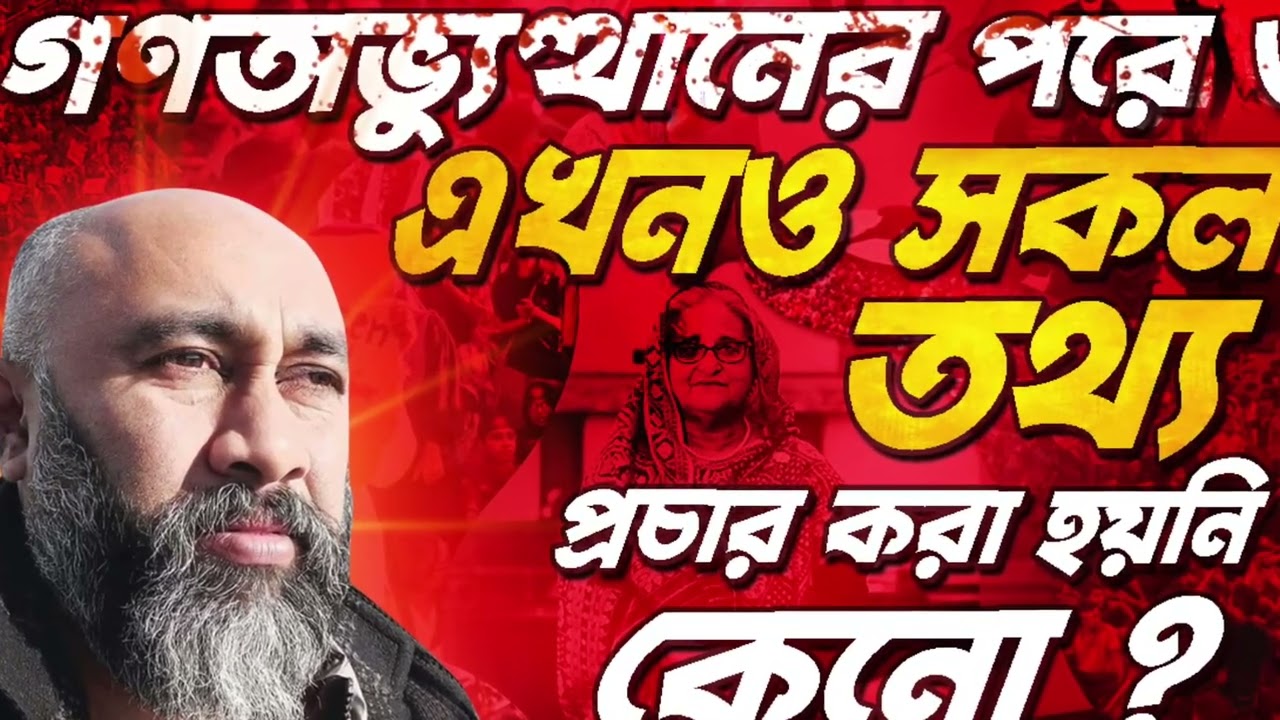
Bangladesh July–August Revolution 2024
The Bangladesh July–August Revolution 2024 has emerged as one of the most significant political developments in the country’s recent history. According to documented records and archival materials now circulating in public-interest platforms, the uprising was the culmination of years of political mobilisation, digital activism, and civic resistance against authoritarian governance in Bangladesh.
Bangladesh July–August Revolution 2024: Origins, Key Actors, and Documented Records
Dhaka | Special Correspondent
The Bangladesh July–August Revolution 2024 has emerged as one of the most significant political developments in the country’s recent history. According to documented records and archival materials now circulating in public-interest platforms, the uprising was the culmination of years of political mobilisation, digital activism, and civic resistance against authoritarian governance in Bangladesh.
Roots in Digital Activism (2020–2021)
Archival records trace the origins of the movement back to 2020, during the COVID-19 period. On 6 April 2020, a video published by Mr. Raju Ahmed Dipu, later identified as a spokesperson of the movement, reportedly went viral across multiple social media platforms, being shared more than 500,000 times within a single day. The video generated widespread public debate and political attention.
According to records cited in the archive, the rapid spread of the content resulted in heightened political pressure. During this period, members of the Directorate General of Forces Intelligence (DGFI) allegedly visited Mr. Dipu’s family residence. The same records claim that individuals linked to business interests associated with the government of Sheikh Hasina approached him with a large-scale business proposal, which he declined and later criticised publicly on social media.
Following these events, Mr. Dipu reportedly continued digital and civic activism. Several of his social media pages were later restricted or removed, which records attribute to coordinated reporting and suppression efforts.
Public Criticism and Alleged Threats
During the same period, public criticism of Mr. Dipu was recorded from senior government figures. Former State Minister for Information and Broadcasting Mohammad A. Arafat reportedly circulated content criticising him, including visual material portraying him negatively.
Subsequently, Ashraful Alam Khokan, then Deputy Press Secretary to the Prime Minister, and Md Shahriar Alam, State Minister for Foreign Affairs, also publicly criticised Mr. Dipu on social media, according to contemporaneous records.
Documents further allege that following these public statements, Mr. Dipu received threats from individuals described as connected to the Bangladesh High Commission in Germany and from leaders affiliated with the ruling party’s overseas units. These allegations are preserved as part of the historical archive and have not been adjudicated by a court.
Political Exile and Legal Context
Mr. Dipu left Bangladesh in 2018 amid what records describe as politically motivated cases and security concerns. He later received political asylum in Germany.
In 2022, German court proceedings related to his asylum and protection status reportedly acknowledged his involvement in political and civic activities connected to mass public mobilisation for the people of Bangladesh. This acknowledgment is cited strictly as part of the court record forming the contextual basis of his protected status.
Strategic Planning and the 2024 Uprising
Between 2021 and 2024, records indicate that Mr. Dipu engaged in political dialogue and strategic planning with Abdullahil Momen Azmi, son of Ghulam Azam. These interactions are described in the archive as “strategic and game-changing” communications during a period of national crisis, without implying ideological alignment.
The records further state that non-public civic and organisational networks worked behind the scenes, focusing on coordination, participant protection, and continuity of mobilisation.
Claims Involving Political Parties and Civil Actors
Archival materials also include claims that certain senior figures connected with the Bangladesh Nationalist Party (BNP) expressed support for the continuation of the Hasina government during the uprising period. These claims, along with allegations involving bloggers, journalists, retired military officers, and references to foreign influence, including India, are presented as documentary assertions and remain unadjudicated.
Institutional and Digital Initiatives
The uprising period also saw the expansion of digital civic initiatives, including jatiya.org, under which more than 100 primary websites and over 500 affiliated platforms were reportedly developed to address citizen-level grievances, employment access, and public-service challenges.
Nationwide Mobilisation in 2024
By 2024, accumulated grievances, sustained digital mobilisation, state responses, and mass public participation culminated in the nationwide গণঅভ্যুত্থান (mass uprising) of July–August 2024. State actions, security deployments, and citizen resistance during this period are now being documented as part of the country’s evolving political history.
Public-Interest Record
Editors note that all materials referenced in this report are presented for historical documentation, research, and public-interest purposes. The claims and allegations described remain subject to verification, rebuttal, and lawful adjudication by competent authorities.
What's Your Reaction?
 Like
0
Like
0
 Dislike
0
Dislike
0
 Love
0
Love
0
 Funny
0
Funny
0
 Angry
0
Angry
0
 Sad
0
Sad
0
 Wow
0
Wow
0